


Ayasofya/Hagia Sophia Guide
Hagia Sophia, one of the most prominent monuments taking place in Istanbul, Turkey, hosts millions of visitors every year. It became a UNESCO World Heritage Site in 1985.
Ayasofya has a long and diverse histoy that represents the changes that occurred throughout the history of Istanbul. From its construction in the 6th century until the Ottoman era in 1453, Hagia Sophia was originally used as a church. During the Ottoman period, it was converted into a mosque. In 1934, after the establishment of the Republic of Turkey, under the direction of Turkey’s secularist founder, Mustafa Kemal Ataturk, it became the Hagia Sophia museum. However, on July 24th, 2020, Hagia Sophia was officially converted into a mosque again under the direction of Turkish President Recep Tayyip Erdoğan.
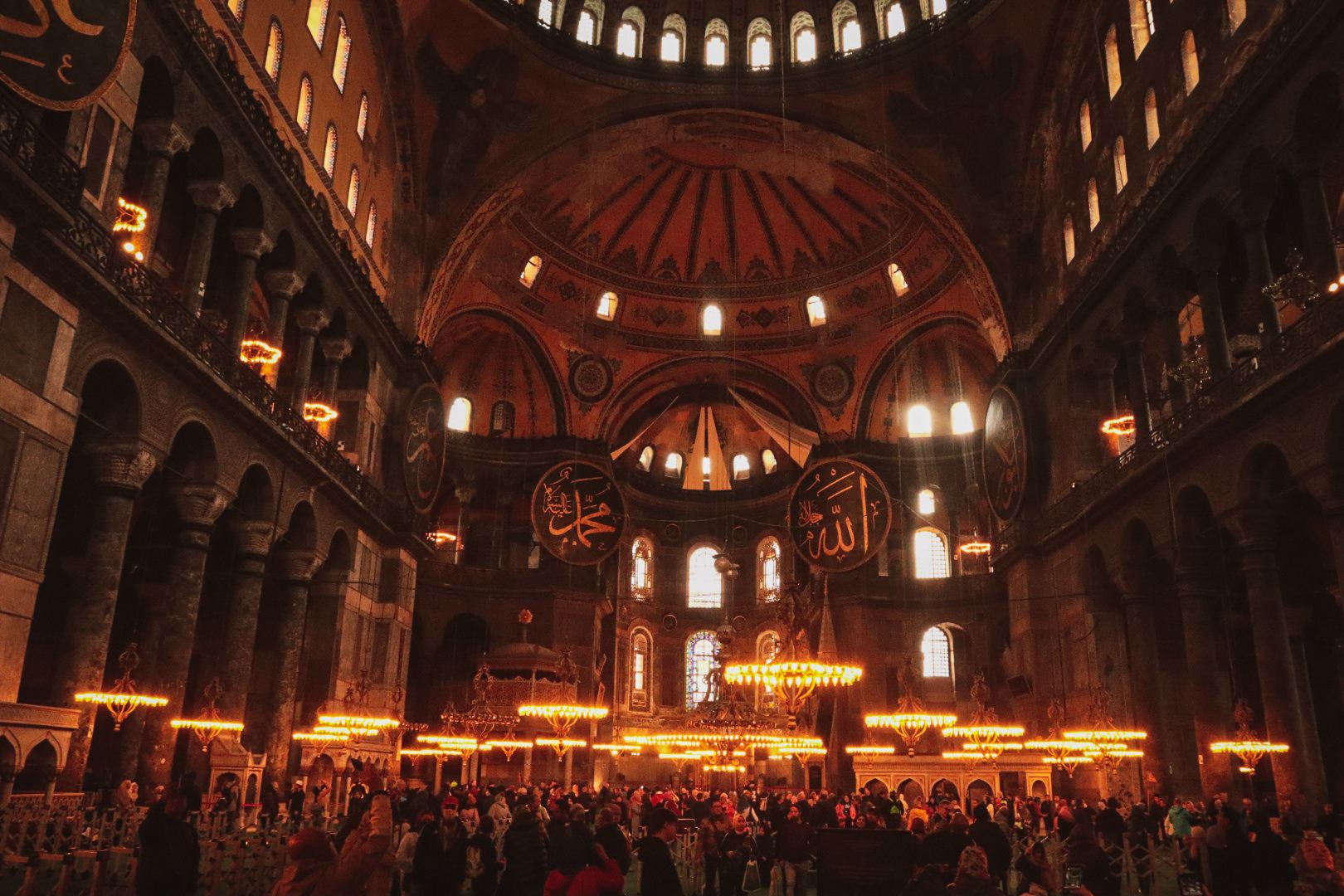
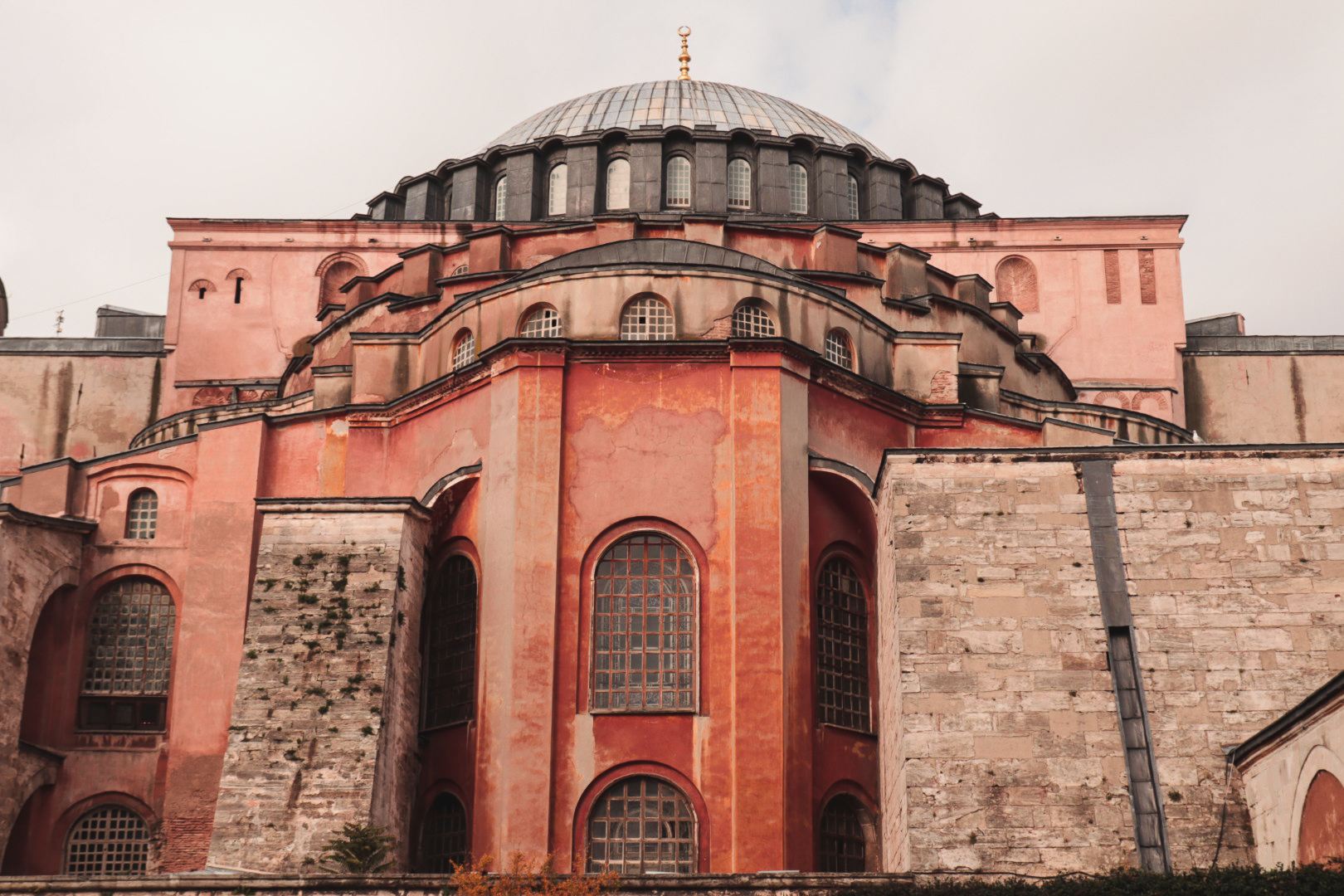
Due to its historical background, and passing through the hands of various cultures, both the exterior and interior of Hagia Sophia behold an incredible mixture of Islamic, Catholic, Paganist, and Orthodox architecture and art. This is what makes the Hagia Sophia so special, differentiating it from all the other mosques and churches that can be found in Istanbul.
Visiting Information
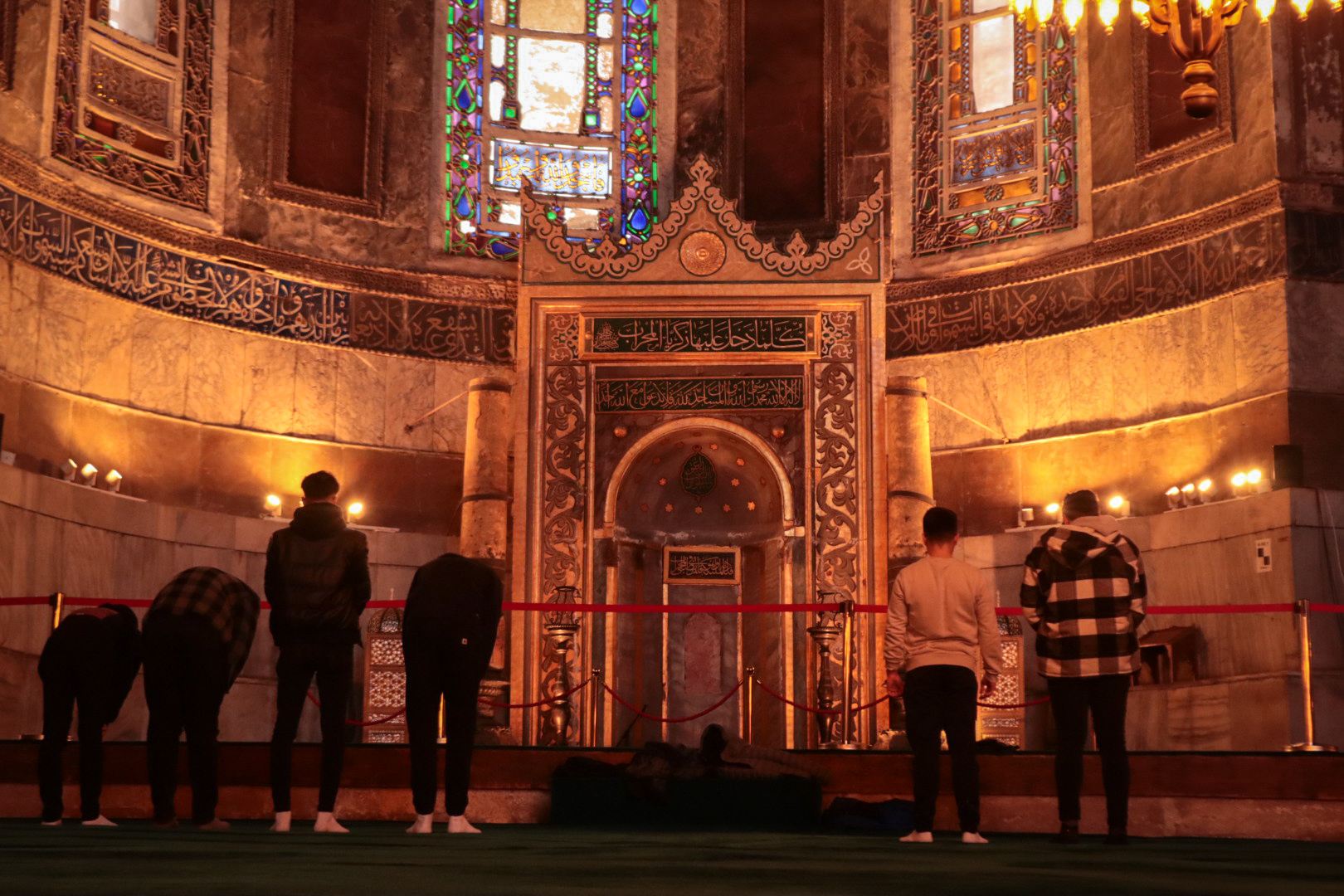
Due to being converted from a museum into a mosque, Hagia Sophia is open 24 hours. During prayer times, however, you can only enter the visitor’s section. As with other mosques, women must cover their head and visitors must be dressed modestly.
Starting January 15th, 2024, the Hagia Sophia Grand Mosque implemented a new visitor management policy, separating worshippers from tourists visiting for cultural reasons. Tourists are charged a 25 euro entrance fee and can access the mosque's gallery floor, where they can view the sanctuary, Ottoman-era annexes, and Byzantine-era mosaics. The policy includes enhanced security measures, restoration efforts, and a QR code system providing information in 23 languages, aimed at preserving the site and improving visitor experience without disrupting worshippers. You can find more information on the official site.

Location

Ayasofya is awe-inspiring—one of the first things to see when you're in Istanbul. It is located in Fatih, a district containing the most historic areas of Istanbul (Sultanahmet).
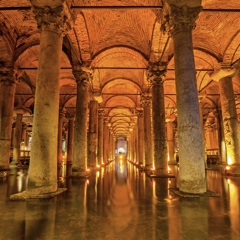
Luckily, it's right next to Topkapı Palace, the Blue Mosque, and the Byzantine Hippodrome, and right across the street from Yerebatan Sarnıcı, the Basilica Cistern, which makes it easy to combine your visit with other historical sights too.
Being in the center of Istanbul makes it also easy to access. As most of the little streets and roads are closed to car traffic, you can either choose to walk or take the tram. If you decide to take the tram, you have to get out at the station called Sultanahmet/Blue Mosque.
Combine with
- The Hürrem Sultan Hamamı (Turkish bath of the Ayasofya mosque complex), placed on the southwest side of Ayasofya next to the park with the fountain, which was designed by a master architect called Mimar Sinan (Architect Sinan) and built for Sultan Süleyman the Magnificent. It has been beautifully restored and is again in service as a hamam (Turkish bath).
- The Sultanahmet Mosque, also known as The Blue Mosque, is placed just in front of the Hagia Sophia, which adds something very special to the atmosphere of that location. The cultural juxtaposition of these two historical monuments facing one another, is something everybody should experience.
A Bit of History
Ayasofya was the greatest church in Christendom, as it was meant to be. According to Prof. Robert Osterhout, it was built to surpass the gigantic Church of St Polyeuktos erected by Julia Anitzia, scion of the line of Theodosian emperors.
Julia meant her church, a "recreation" of the Temple of Jerusalem, to symbolize her wealth, power and legitimate claim to the throne of Byzantium. Justinian had to out-build her to establish his own legitimacy—and he did.
His church remained the largest church ever built until St Peter's Basilica was constructed in Rome 1000 years later. (Julia's church, by the way, was destroyed by an earthquake. Nowadays,you can still see a few pitiful ruins of it near the traffic under/overpass between the Istanbul City Hall (Belediye Sarayı) and Aqueduct of Valens (Bozdoğan Kemeri).
It is called Hagia Sophia (holy wisdom) in Greek, Sancta Sophia in Latin, Ayasofya in Turkish, and was built in 537 AD on the site of Byzantium's acropolis by Byzantine Emperor Justinian (527-65 AD). Even if it's only to see the details of architecture with its wide, flat dome, being a daring engineering feat in the 6th century, it is worth visiting and experiencing the historical sense of the past.
You can also check out my short article for Travel & Leisure magazine (US) about Ayasofya entitled "Ayasofya: the Perfect Space."
About the Architecture
- The moment you enter Hagia Sophia you encounter enormous columns, what makes them significant is that, during the time Hagia Sophia was built, these columns were brought from various processed ancient buildings, one of which was from the Artemis Temple of Ephesus.
- The giant gate, leading you to the main hall of the Mosque, is called the Emperor’s Gate. Being the biggest gate of Hagia Sophia and made from oak wood, it is claimed that the oakwood was gathered from the ark of Noah.
- In one of the columns, you will find a hole where people put their thumbs in, and turn clockwise while making a wish. This hole is called the “Wish Column”. According to an ancient myth, it is said that one day while emperor Lustinianus was walking through Hagia Sophia, he got a severe headache, and as a reflex held on to the column. At that moment he realizes that his headache vanishes in an instant. As this incident spreads around the folk, people start to believe in the healing power of the column. This is where the “Wish Column” takes its name from.
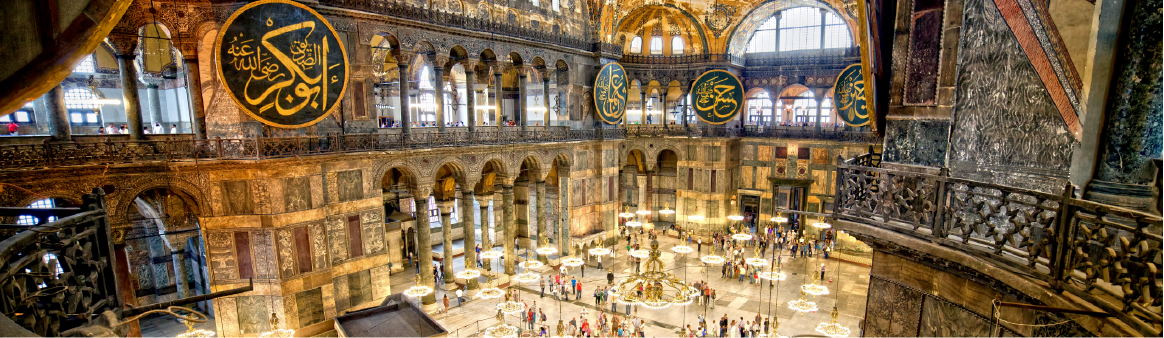
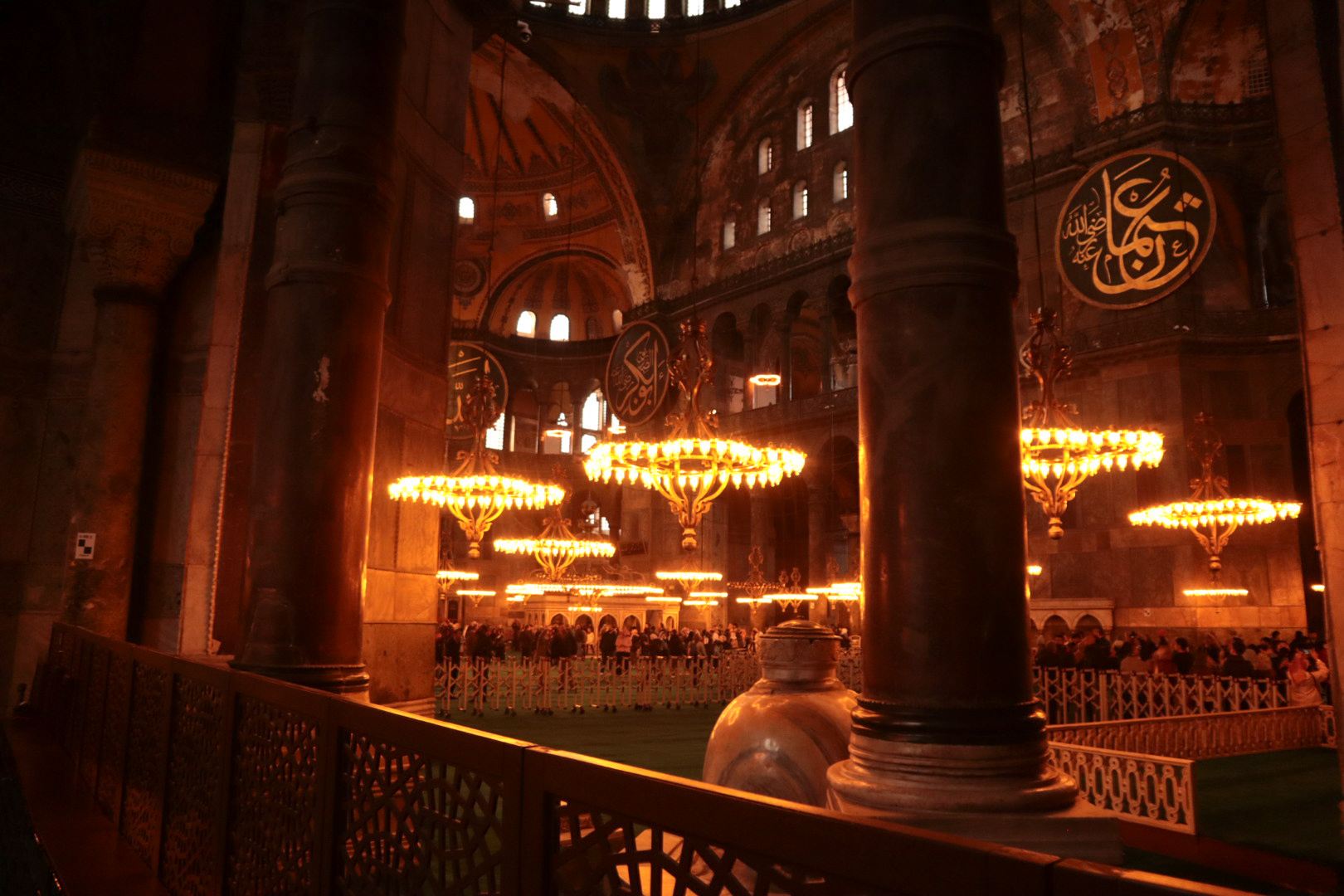
- If you look up towards the dome, your eyes will catch 8 calligraphic words written in Arabic. All of which are different holy names such as Allah, Hazrat (Hz.) Muhammad, Hz. Ebu Bekir, Hz. Ömer, Hz. Osman, Hz. Ali and Hz. Muhammad's grandchildren Hz. Hasan and Hz. Hüseyin. The names of Hz. Hüseyin and Hz. Hasan, hanging above the entrance door, is a symbol of respect and justice in this place.
- Most of the 30 million gold tesserae (tiny mosaic tiles) which cover the church's interior—especially the dome—have recently been restored to the brilliance they boasted 1500 years ago.
- The mosaic of the Virgin Mary holding Jesus in her bosom in the dome has since been covered with a piece of cloth after being converted into a Mosque.
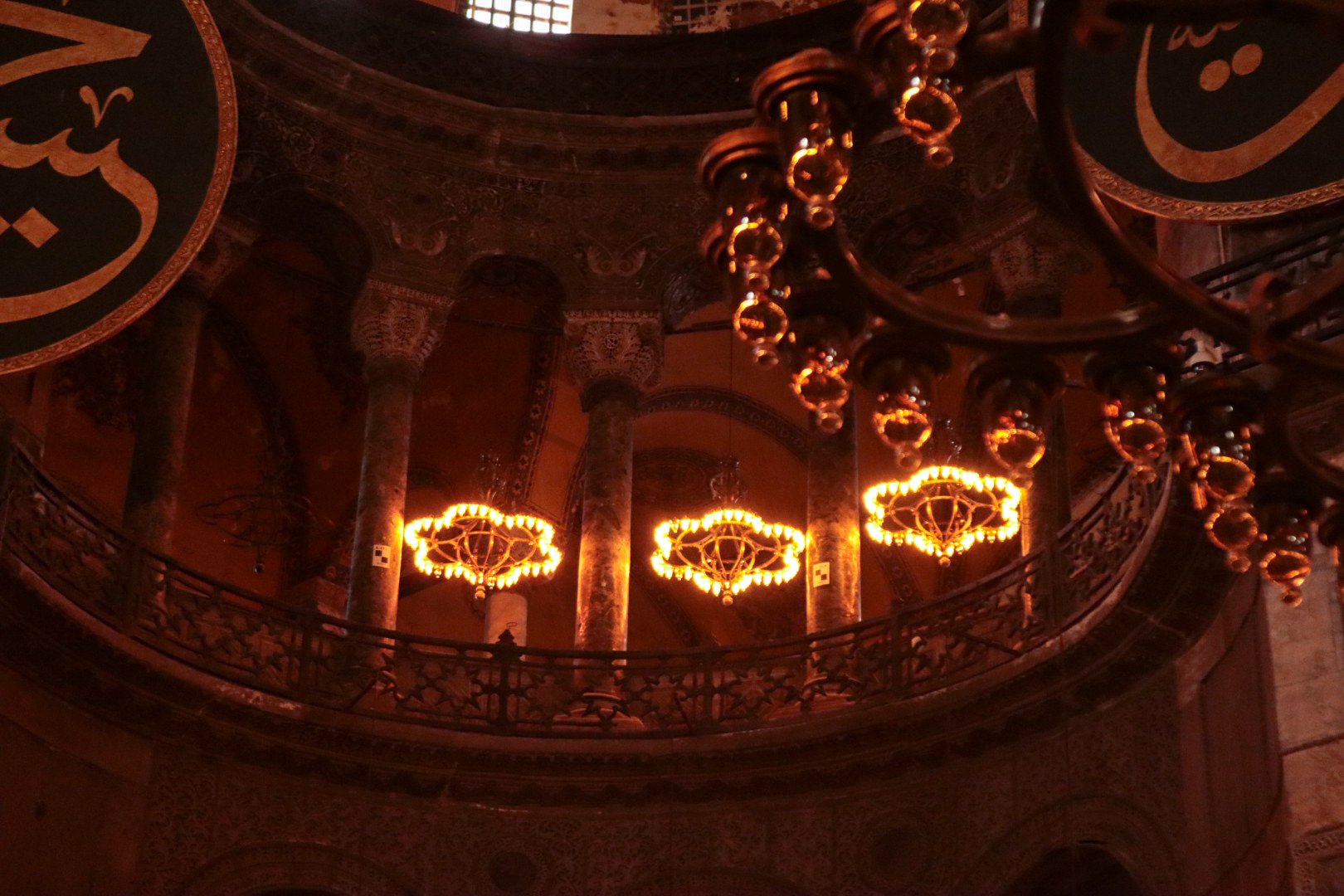
Previously, you were able to get on the mezzanine level to have a better view of the splendid Byzantine mosaics, and the majestical sight of the illuminated chandeliers, sparkling and enhancing the mystical atmosphere of the Museum. But the mezzanine level is currently closed to visitors since July 2020.
- by Tom Brosnahan, updated by Julide Koca


Read More



 Best Travel Agencies
